

A soft photo does not always need a faster shutter. A noisy photo does not
always need a lower ISO. First, work out what the photograph is telling you.
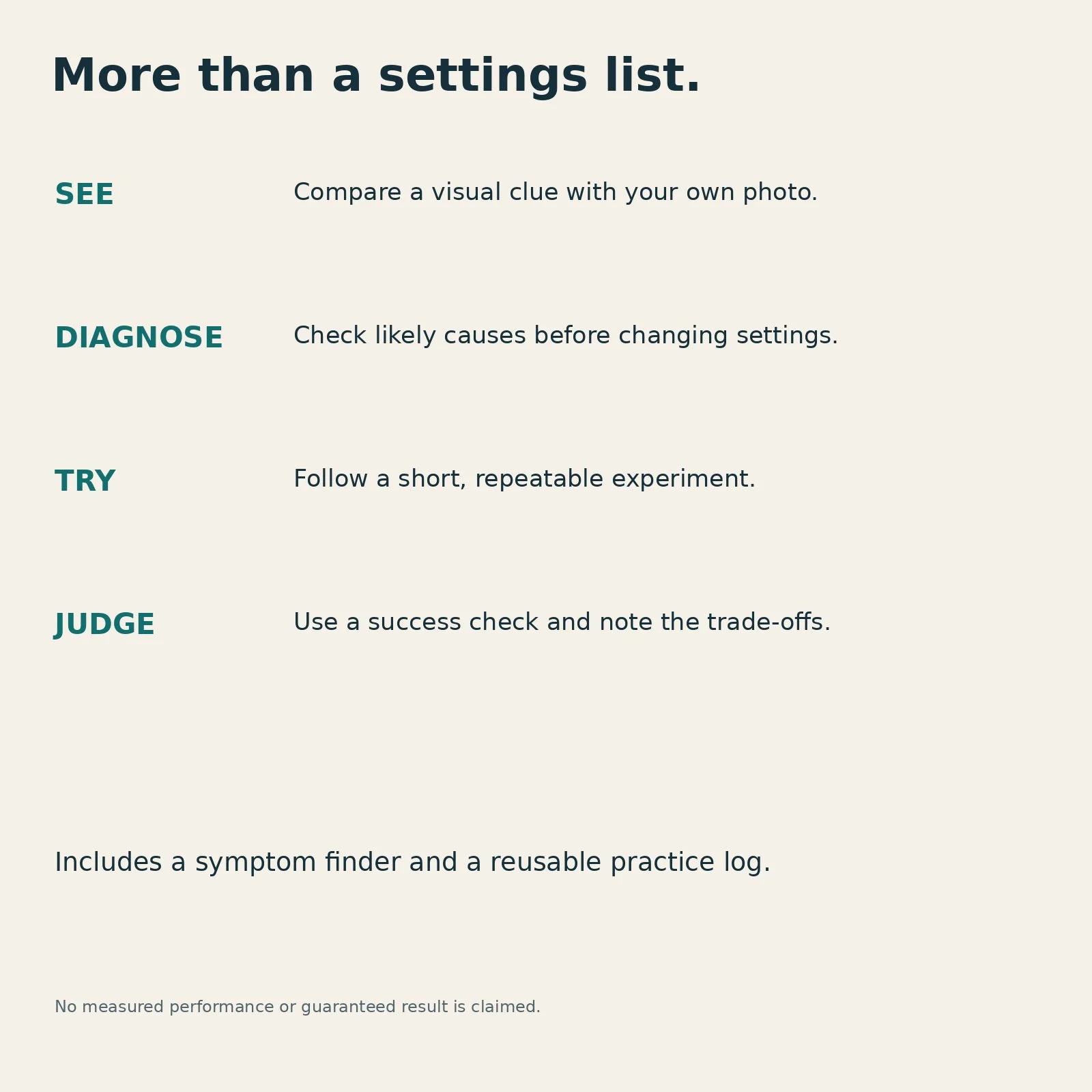
Fix Your Next Photo helps you recognise six common beginner problems and
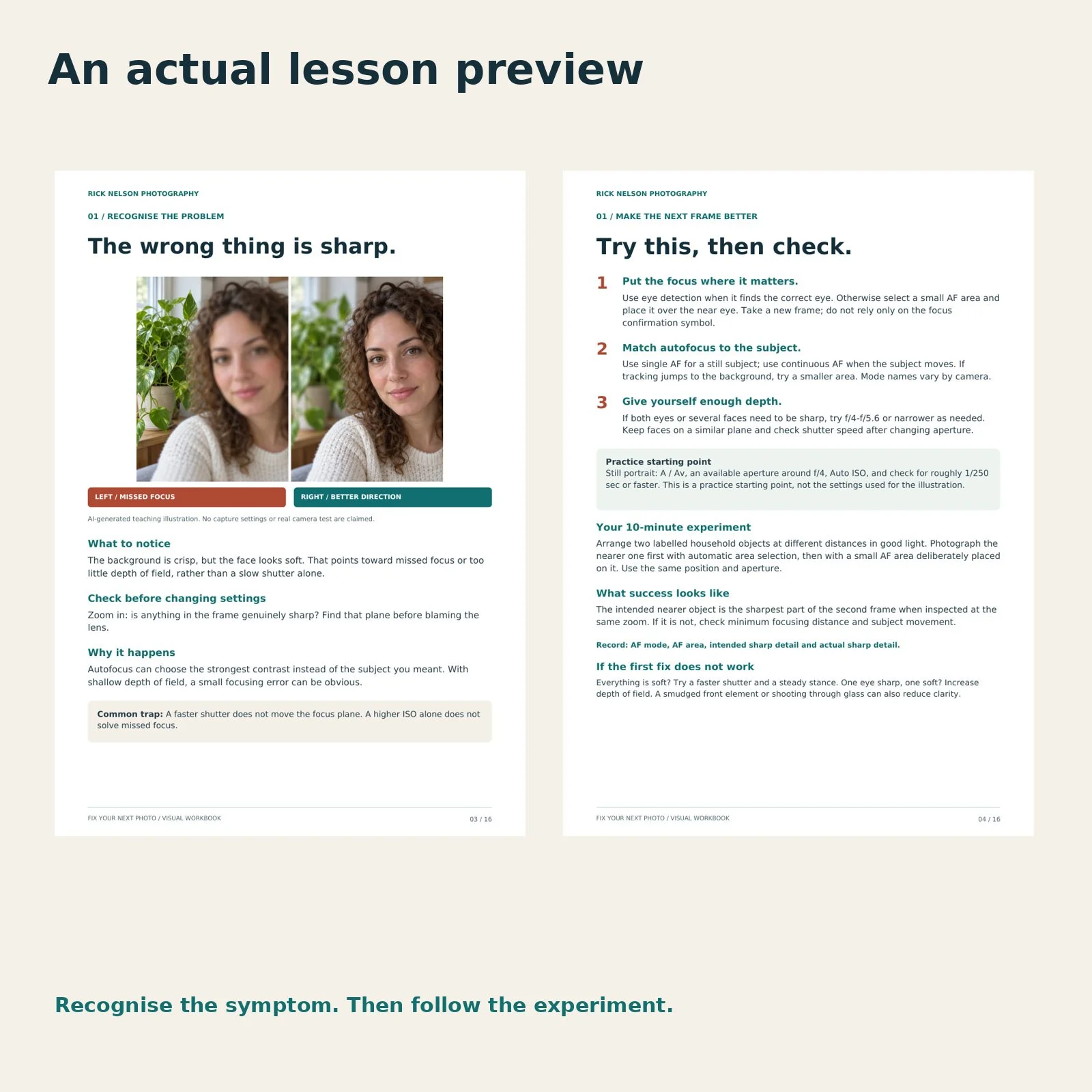
choose a sensible next step. Each two-page lesson includes a visual
comparison, clues to check, likely causes, practical corrections and a short
experiment you can repeat with your own camera. A success check helps you
judge whether your change worked and what trade-off it introduced.
THE SIX LESSONS
1. Missed focus: the background is sharp, but the subject is not.
2. Motion blur: the moving subject smears while the scene stays sharp.
3. Low-light noise: find more useful light without sacrificing sharpness.
4. Distracting background: improve separation with position and aperture.
5. Exposure: retain important bright detail at capture.
6. White balance: recognise a colour cast and simplify mixed light.
INCLUDED
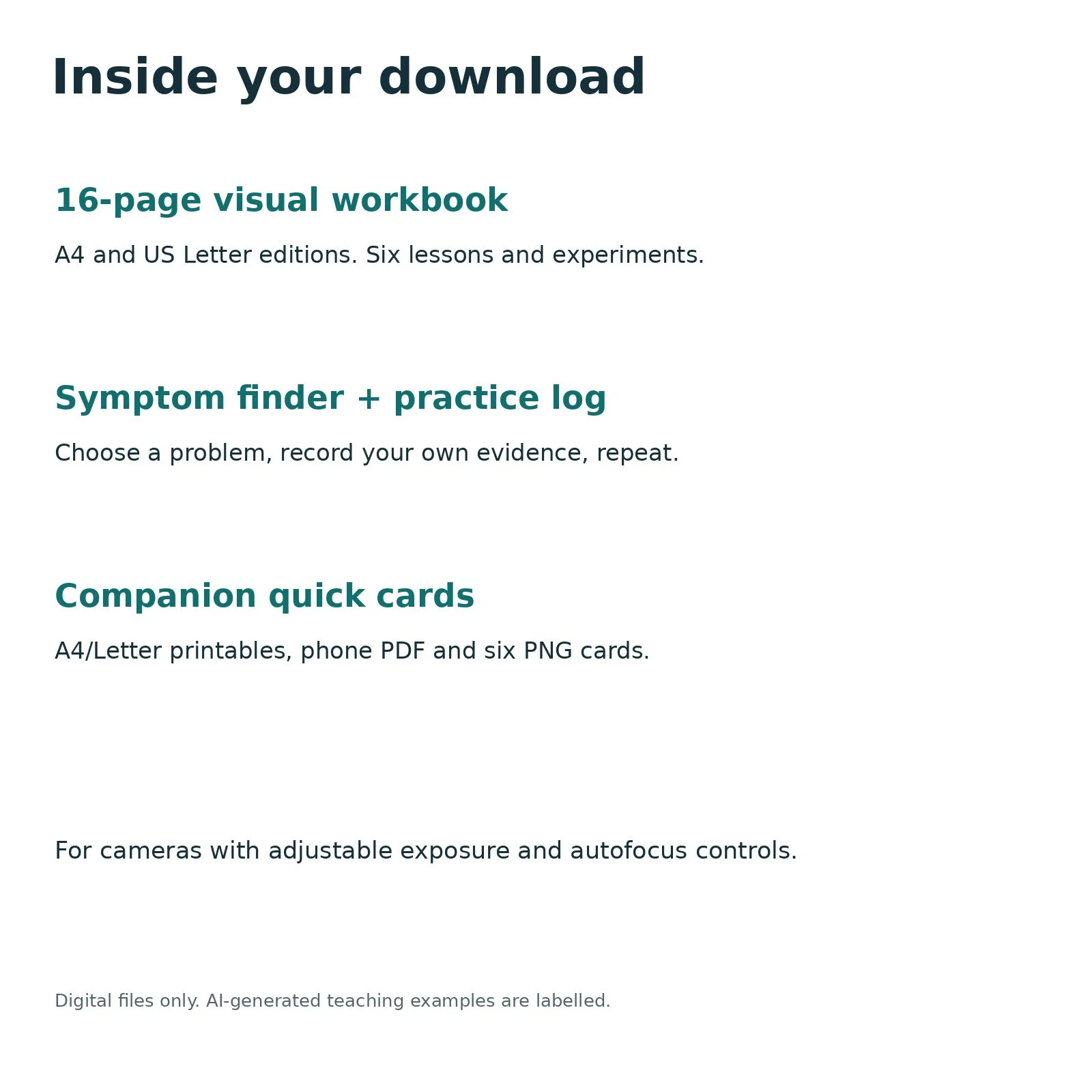
- 16-page visual workbook, supplied in A4 and US Letter editions.
- Clickable symptom finder and reusable printable practice log.
- Six short experiments with success checks and fallback advice.
- Companion Camera Confidence Quick Cards: A4 and Letter printables,
an 8-page phone PDF and six PNG phone cards.
- Start Here instructions and personal learning licence.
WHO IT SUITS
Beginners using DSLR, mirrorless or compatible compact cameras with
adjustable exposure and autofocus controls. Features vary by model.
This is not a camera-specific menu manual or dedicated smartphone guide.
HOW TO USE IT
Choose a symptom, read the checks, make one change and take another frame.
Open the PDFs on your device, or print the matching paper-size edition.
The companion cards provide shorter reminders for your next shoot.
DIGITAL PRODUCT DETAILS
One ZIP download containing PDF, PNG and text files. No physical item,
presets, editable templates, video course or personalised coaching.
Print costs are not included; printing is optional. Results depend on
your light, subject, equipment and technique. No guaranteed outcome.